Exploring Depersonalization Through Serial Experiments Lain!
And How a Show From 2001 Still Speaks Volumes to This Day

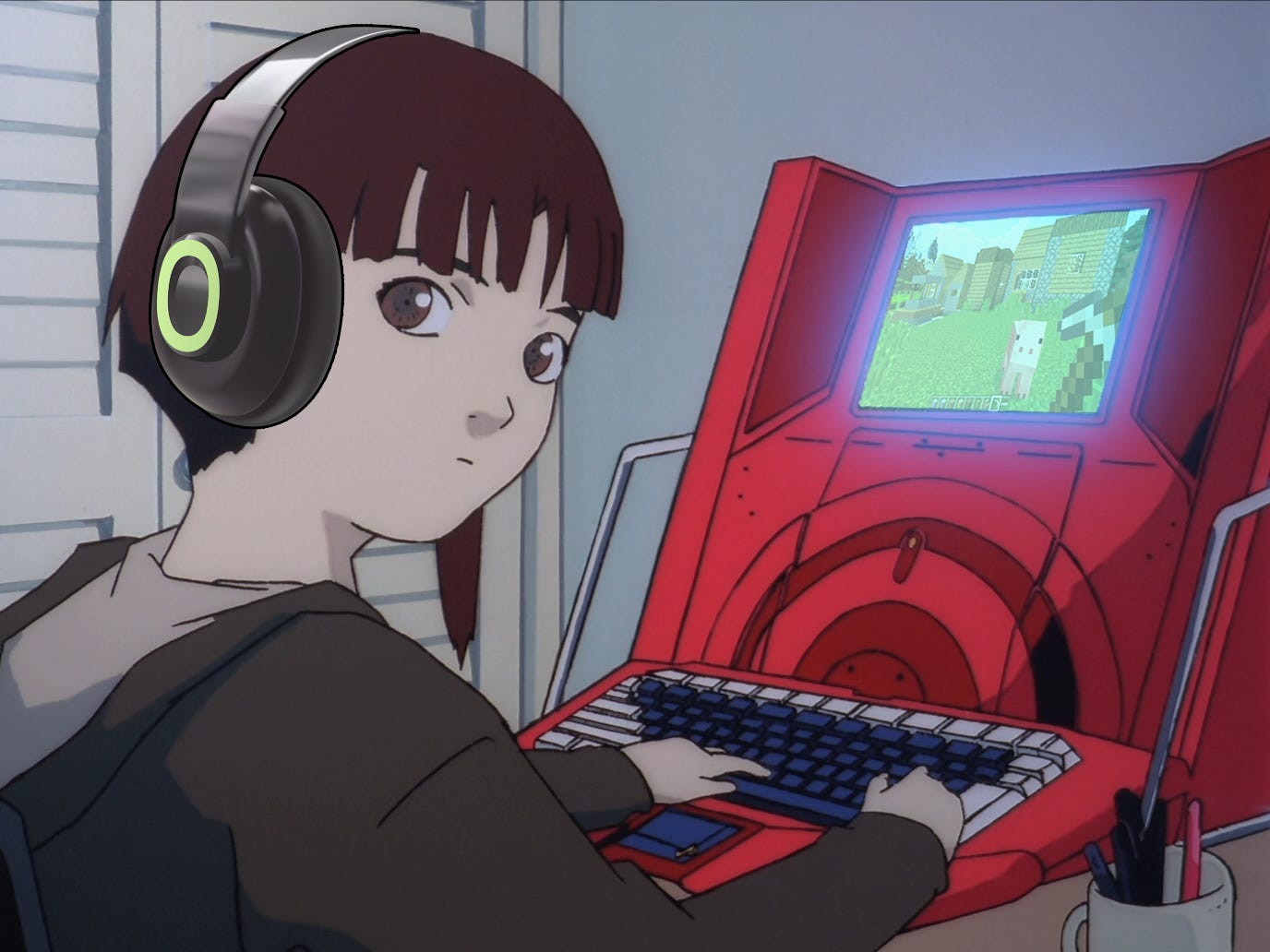
Serial Experiments Lain is a niche anime that was released in 1998. The 90’s were a very dynamic and experimental phase for anime. With well regarded hits whose impact can still be felt to this day such as; Neon Genesis Evangelion, Cowboy Bebop, Yu Yu Hakusho, Revolutionary Girl Utena, Pokémon, One Piece, etc. Anime at that time was on the rise and its influence became quickly/tangibly felt around the globe. Especially, here in America!! With Toonami being an extremely helpful vehicle to spread and cultivate people’s love for the genre. Toonami was always airing daring and Avant-garde shows like cowboy bebop and one piece late at night. It was a nice change of pace for an American audience who were completely unfamiliar with that style of animation/visual storytelling/etc.
Serial Experiments Lain was a curve ball and complete oddity. Even for a genre filled with many unconventional shows, Lain was a show unlike its predecessors. Between its surrealist imagery and completely unique plot/atmosphere/themes, the series was a style of anime not too common amongst its competition. The shows since its inception in the late 90’s has garnered much support and its fanbase is now substantial and rabid. Even within the last year, the shows opening theme song has become a viral sound for tiktok!
The reason people have gravitated and have become fascinated with the show is because of the world it created in just 13 episodes. With exploration into the themes of; social alienation, dependence on the internet, identity, existentialism, depersonalization and so many other complex and dense themes. Serial Experiments Lain was a distinct tangent away from conventional ideas of what an anime should be.
This Anime came out in the 90’s but does a great job of describing/reflecting modern issues, despite being extremely dated. The show was made in a time where Y2K aesthetics and early ideas of technology were much farther removed from where we’re at now. Yet it’s themes regarding communication through the internet and the sort of multiple states of identity through digital interface, are as scary and apt as they were when the show was first aired almost 20+ years ago.
About the Show
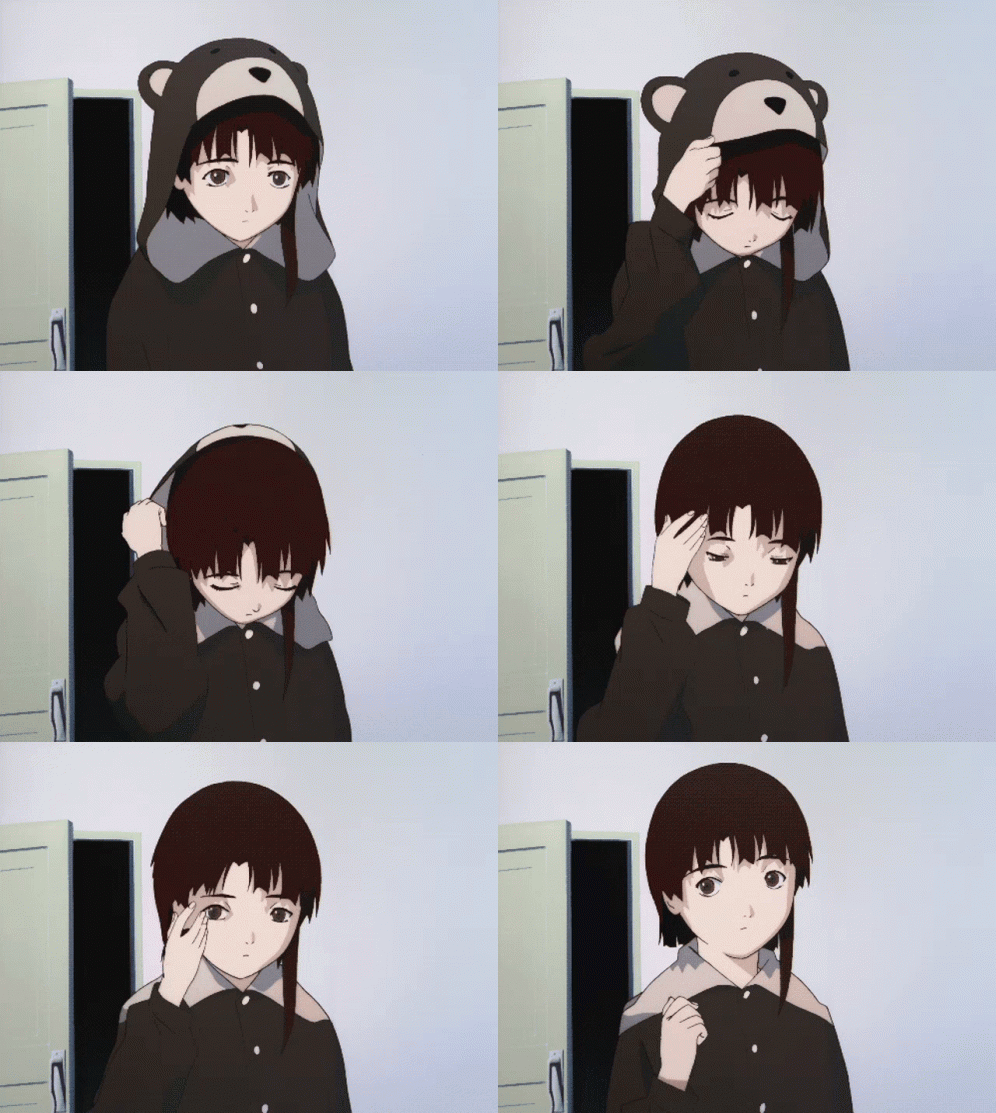
The show follows Lain Iwakura, a socially isolated junior high school girl in 1990s Japan. Strange incidents unfold after she discovers that deceased classmates are sending emails. As Lain explores the mystery of why this is happening, its similar to Alice in the wonderland in that she delves into a surreal world, that being the internet. And spends her time there unraveling themes like: consciousness, perception, and depersonalization and how all of these things are informed by the internet. The show vividly depicts the consequences of online actions on real-world relationships and reputations. Lain's struggle with a dual online and offline identity becomes a focal point, mirroring the challenges of navigating the digital age. Her constant use of the internet literally causes her to not only depersonalize and be addicted to the cathartic zombie state of too much internet use, but also completely lose her sense of self and her identity.
Depersonalization!
Depersonalization can best be defined as, “The persistent feeling of observing oneself from outside one’s body or having a sense that one’s surroundings aren't real”. This is a common way overexposure to the internet can affect your sense of reality because of how easy it to depersonalize on there. I know for myself, that I can spend hours scrolling mindlessly and then have a sudden snap back to reality, and wonder where did I go? Through social media it is easy to let go of the idea of “I” and then just ride along for the experience whatever facet of the internet has in store for you that day.
In the realm of depersonalization, it is easy to be encapsulated by the persistent feeling of observing oneself from an external perspective or to experiencing the simulation of an experiences, and the intricate dance between the virtual and the real becomes pronounced. Personally, I've found myself engrossed in questioning the fleeting nature of my digital existence. Time passes me by and i often feel empty because i spend most of my days on Social media and not really living life. The ability to spend hours on a social media platforms can lead to depersonalization and a loss of self.
The internet offers a paradoxical blend of hyper-reality and complete fabrication. The allure of surrendering the self to the online realm, passively absorbing whatever the internet presents, exemplifies the peculiar nature of having to navigate the digital landscape.
Dr. Elena Bezzubova, in her article about depersonalization and social media stated that. “Digital depersonlization is closely linked to a lack of “wholeness of perception” and “wholeness of relatedness”. Digital imagery is always incomplete. An object in a cyber world is a partial object.” She also reiterated that, “relationships with partial objects are experienced as partial, insufficient and lacking. This constitutes the depersonalization quality of the internet.
The most palpable source of the feeling virtual unreality is the “emotional gap” between real and digital experiences. The emotional roots of feeling real are beyond cognitive formulas in deeper unconscious layers of the psyche. The emotional and the intuitive are organic components of the entirety of any “alive” human experience”
Essentially, saying that social media is both real and unreal! Or more so incomplete if you will. That social media is real in the sense that we are experiencing and collectively sharing experiences, thoughts, and communication as if it were the real world. But fake because of the recognition that objects consumed online have a sort of ‘falseness’ to them because they are not tangible in our hands. The internet is often at its best for its ability to uncannily simulate/emulate real life feelings and emotions.
But also because of the depersonalization that one may experience as they are online, there is a severe “emotional gap” between what is real and what is not. This sort of rapid oscillation between the hyper and hypo states of being/internalization can not only cause a sort of repeated desensitization and numbness. But may also have significant effects on one’s identity and their perception of themselves as well as their overall well being.
The dynamic interplay of identity and the fluidity of it as it pertains to the internet can be directly traced by its influences of both real-world and online experiences. Which then can contribute to feelings of disorientation and pressure to conform to online trends. It's essential for all young teens and chronically online people to develop critical thinking skills and a healthy sense of self so there can be some space from the echo chamber of other people’s thoughts. Lest you are susceptible to being lost in the sea of other people’s thoughts/ideas/opinions. Formulate hobbies and a sense of self outside of the internet and do not prescribe all of your intrinsic value in a fleeting thing like the internet.
Identity
Social media and identity are like an intense game of ping pong, meaning that the bouncing of your identities off of others and others off of you is constant and never ending like a ping pong game. Similar to dialectical materialism, we both shape the internet and are shaped by it, and constant use of the internet and online discourse leads to intensified fragmentation of the self. Through numerous avenues of having online interactions/communities/personas, a person’s identity is no longer a cohesive narrative that is easy to follow because it is extremely multifaceted and hard to prescribe a distinct self definition. The metaphorical game of ping pong represents the constant negotiation and fluctuation of identity in a world heavily influenced by internet culture and its impact on our personal identities.
At the beginning of the show, Lain was shown to be reclusive and not at all knowledgeable about the internet like most of us were at one point in our lives. In a sense, Lain was being left out because of her ignorance concerning digital communication. Being that the digital space in the show as well as real life, is where most people choose to spend their time at. A person’s online presence and awareness of the on-goings of the internet have become a large factor of their social standing in the modern world. This indicates that only a portion of a person can be seen on the Wired, and therefore a person cannot truly be known through digital communication.
Which leads me to the crux of the issue, the impact of the internet on individual identity. The internet leads to depersonalization, and the blurred lines between the virtual and real worlds. Overexposure to a phenomenon this unregulated and difficult to navigate without proper digital literacy can lead to you being severely affected. A common way in which we are all affected by the dependency on the internet is because we can curate our experience on the internet so finely tuned that we obsess over our identities in relation to others. Moreover, the ease with which we pacify ourselves through purposeful dissociation and rumination further clouds the waters of self-discovery. Genuine reflection becomes a hard in a sea of digital noise and a brain that is operating like a hamster on a wheel. The goal is not merely to exist in the digital realm but to actively engage with it, fostering a conscious and discerning sense of self that can healthily navigate the internet with proper digital literacy.
Conclusion
The Internet's influence extends beyond mere depersonalization; it cultivates an environment where the boundaries between the authentic and the curated become increasingly indistinct. In this labyrinth of online experiences, The prevalence of the internet introduces a challenge: the ability to create an online echo chamber tailored to our preferences. This curated experience, while seemingly empowering, has the potential to foster self-delusion. As we immerse ourselves in the online world, it becomes increasingly difficult to discern our authentic selves.
In conclusion, Serial Experiments Lain serves as a poignant reminder of the intricacies embedded within our digital existence. The series compels us to question the consequences of our online actions, urging us to navigate the complex web of identity, depersonalization, and societal pressures with thoughtful consideration. As we grapple with the evolving dynamics of the internet, cultivating digital literacy and embracing genuine self-reflection are imperative for preserving the authenticity of our identities amidst the ever-expanding digital wilderness.
Sidebar/Notes?
want to thank anyone who made it this far into my article, it means alot that you took the time to read. I can link a video that does a really good job recapping the themes and events of this show! I also had a conversation with my friend on this exact subject and will link that as well!
Links
https://www.psychologytoday.com/us/blog/the-search-self/202005/digital-depersonalization-in-the-time-social-isolation